
Building Unbreakable: What Exercise Physiologists in Columbus Know About Bone Density
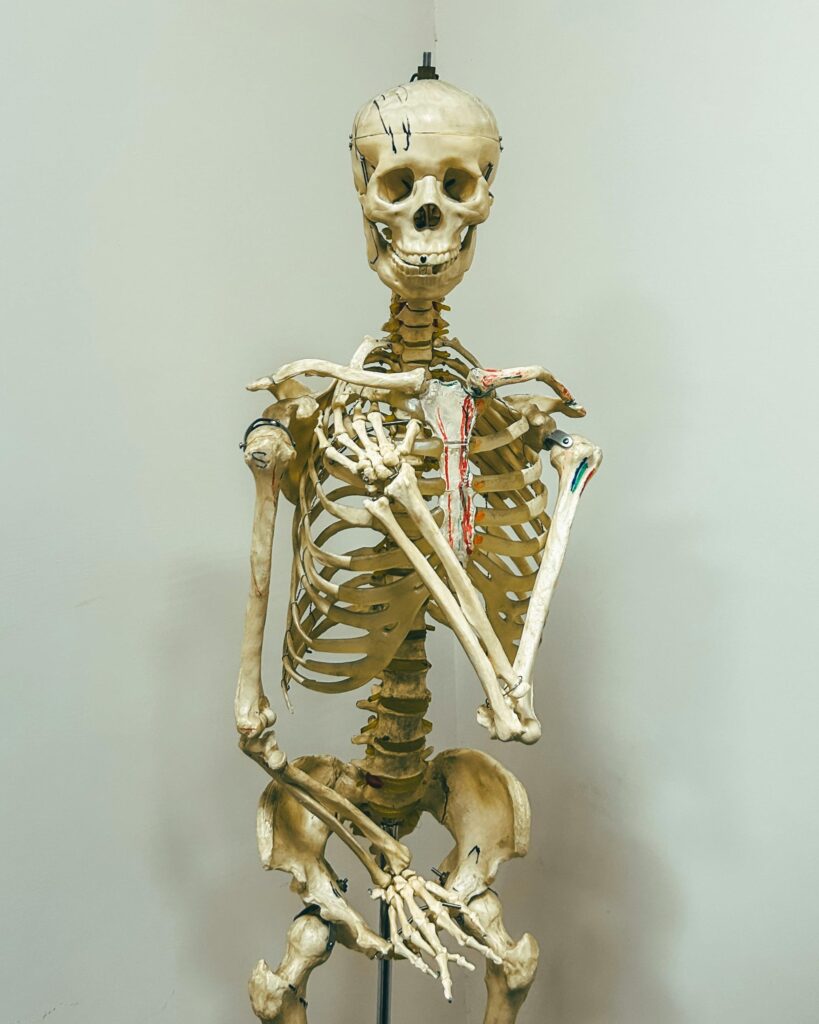
Your skeleton is a savings account.
Every step you take, every weight you lift, every jump you land—these are deposits. But here’s the thing about bone: it operates on use-it-or-lose-it economics. Stop making deposits, and your account starts draining. Fast.
Most people don’t think about their bones until something breaks. That’s like checking your retirement account the day you turn 65. By then, the compounding has either worked for you or against you.
The good news? Your bones are listening. Right now. Today. And they’re far more responsive than you might think.
What Personal Trainers in Columbus Should Tell You About Your Skeleton
Bone is living tissue. It’s not the static scaffolding you see in anatomy textbooks—it’s dynamic, constantly rebuilding itself through a process called remodeling.
Think of your bones as a city under perpetual construction. Old structures get demolished by cells called osteoclasts. New structures get built by cells called osteoblasts. When you’re young, the construction crews work overtime, building faster than they demolish.
Somewhere around age 30, the balance shifts.
After that peak, most people lose about 1% of their bone density annually. Women can lose up to 20% in the five to seven years following menopause. These aren’t just statistics—they’re trajectories that determine whether you’re hiking at 75 or afraid to step off a curb.
At Columbus Fitness Consultants, we see this pattern play out across the Columbus metro area. Clients come to us worried about joint pain or wanting to get stronger, and we discover through DEXA scan analysis that their real challenge is skeletal.
The skeleton they’re walking around in isn’t keeping pace with the life they want to live.
How Fitness Trainers in Dublin, Ohio Approach Bone Health
Here’s what separates qualified exercise physiologists from conventional fitness approaches: we understand that bone responds to specific mechanical signals.
Your bones don’t care how many calories you burned. They care about force, impact, and load. They need to feel stressed—in precisely the right ways—to trigger that construction response.
Weight-bearing exercise sends a clear message to your osteoblasts: “Build here. Reinforce this. We’re going to need it.”
Running, jumping, and lifting weights create ground reaction forces that travel through your skeletal system. These forces create microscopic deformations in bone tissue. Your body interprets these deformations as signals: strengthen this area.
But here’s the nuance that matters: not all exercise triggers bone formation equally.
Swimming is fantastic for cardiovascular health and joint mobility. But because water supports your body weight, it doesn’t provide the mechanical stress your bones need to adapt. Same with cycling—excellent for leg strength and heart health, minimal bone-building stimulus.
Your bones respond to impact and resistance. They need gravity plus load.
Why Medical Fitness in Columbus Focuses on Progressive Loading
The principle is straightforward: bones adapt to the loads you place on them. Apply too little stress, and you won’t trigger adaptation. Apply too much too quickly, and you risk injury.
This is where biomechanical expertise becomes critical.
A generic fitness program might have you jumping into high-impact exercises without assessing whether your current bone density, joint alignment, and movement patterns can handle those forces safely. That’s not evidence-based training—that’s hope-based training.
Our approach at Columbus Fitness Consultants starts with assessment. We look at your current capabilities, your movement quality, any existing injuries or limitations, and your bone density baseline when possible. Then we build a progressive loading strategy that challenges your skeletal system without overwhelming it.
For many of our clients in Upper Arlington and Worthington, this means starting with bodyweight exercises focused on perfect form. Squats. Lunges. Step-ups. Push-ups. These fundamental movements, performed with proper mechanics, create significant skeletal loading.
As tolerance builds, we add external resistance. Dumbbells. Barbells. Resistance bands. The load increases systematically, giving bone tissue time to adapt and strengthen.
Finding the Right Personal Trainer Near Me for Bone Health
This is the critical question: who should guide this process?
Your skeleton is precious infrastructure. It determines whether you can pick up your grandchildren, whether you can travel confidently, whether you can remain independent as you age. The person designing your exercise program should understand skeletal physiology, biomechanics, and progressive overload principles.
At Columbus Fitness Consultants, our staff holds four-year degrees in Exercise Physiology and Kinesiology. We have physical therapists and licensed athletic trainers on our team. This isn’t boutique fitness—it’s biomedical fitness grounded in human physiology.
When someone searches for a personal trainer in Columbus, they’re often looking for someone to make them sweat and keep them accountable. Those things matter. But if you’re serious about building bone density, preventing osteoporosis, and maintaining skeletal health long-term, you need someone who understands how bone tissue responds to mechanical stress.
You need someone who can identify faulty movement patterns that might increase fracture risk, even as you’re trying to strengthen your skeleton.
How Exercise Physiologists Leverage DEXA Scanning
Here’s a powerful advantage: knowing where you actually stand.
A DEXA scan provides a precise measurement of your bone mineral density at key sites—typically your spine, hip, and sometimes forearm. This isn’t guesswork. It’s data.
For our clients throughout Central Ohio, DEXA scanning removes the mystery. You learn whether you have normal bone density, osteopenia (reduced bone density), or osteoporosis (significantly compromised bone density). Each category requires a different exercise approach.
Someone with normal bone density might benefit from higher-impact activities: jumping, sprinting, plyometrics. These create the strong mechanical signals that optimize bone formation.
Someone with osteopenia needs a more measured approach. Moderate impact. Focused resistance training. Careful progression.
Someone with osteoporosis needs specialized programming that builds bone density while minimizing fracture risk. This is where advanced rehabilitation expertise becomes essential.
The challenge is this: the people who most need to build bone density often face the highest risk from poorly designed exercise. That’s the paradox. And it’s why working with qualified exercise physiologists rather than general fitness trainers makes such a dramatic difference.
Corrective Exercise in Hilliard: Beyond Generic Programming
Generic fitness programming assumes everyone moves well. That’s rarely true.
Faulty movement patterns create uneven loading through your skeletal system. If your squat mechanics are poor, you might be placing excessive stress on certain vertebrae while inadequately loading others. If your gait pattern is asymmetrical, one hip might receive significantly more ground reaction force than the other.
Over time, these imbalances affect bone density distribution. They also increase injury risk—and injury is the enemy of consistent training, which is the real key to long-term bone health.
Corrective exercise identifies and addresses these movement dysfunctions. It’s the foundation that makes progressive loading safe and effective.
At Columbus Fitness Consultants, we use Muscle Activation Techniques and biomechanical analysis to identify weak links in your movement chain. Maybe your glutes aren’t firing properly during squats, forcing your lower back to compensate. Maybe limited ankle mobility is affecting your landing mechanics during jump training.
These assessments allow us to design programs that build bone density while simultaneously improving movement quality and reducing injury risk.
The Role of Nutrition in Skeletal Health
Exercise provides the stimulus. Nutrition provides the building materials.
Your bones need calcium—about 1,000-1,200 mg daily for most adults. They also need vitamin D to absorb that calcium effectively. Vitamin K2 helps direct calcium into bones rather than soft tissues. Magnesium supports bone structure. Protein provides the matrix that minerals attach to.
Here’s what many people miss: you can exercise perfectly and still compromise bone health through nutritional deficiencies.
We see this pattern frequently in our Vitality Consulting Program, where we take a comprehensive look at exercise, nutrition, sleep, and recovery. Someone is training consistently, doing the right exercises, but their bone density isn’t improving because they’re getting inadequate protein or vitamin D.
The Columbus area sits far enough north that vitamin D deficiency is common, especially during winter months. Blood testing reveals the gap. Supplementation closes it.
This integrated approach—exercise stimulus plus nutritional support—is what actually builds bone. One without the other leaves results on the table.
Personal Training with Physical Therapists: The Post-Injury Advantage
Let’s talk about the elephant in the room: fractures happen.
A wrist fracture from a fall. A stress fracture from overtraining. A vertebral compression fracture from lifting with poor mechanics. These events can derail bone health progress and create fear around exercise.
The standard medical approach is: rest, heal, then maybe return to activity. But “maybe” becomes “never” more often than anyone likes to admit. Fear wins. Movement decreases. Bone density declines further.
Personal training with physical therapists changes this equation. Our team includes licensed physical therapists who understand the healing timeline, the biomechanical considerations, and how to progressively reload tissues that have been injured.
We can take someone from post-fracture fear to confident, bone-building exercise. We know how to work around limitations, when to progress, and when to hold steady. This continuity of care—from rehabilitation to long-term fitness—is rare in the fitness industry.
For our clients in Westerville and throughout the Columbus metro area, this means injury doesn’t mean the end of skeletal health improvement. It means a temporary pivot, followed by a carefully designed return to loading.
The Vitality Consulting Difference for Bone Health
Here’s what comprehensive bone health support looks like:
It starts with assessment. DEXA scanning for bone density. Movement screening for mechanics. Perhaps VO2 max testing to establish cardiovascular fitness levels, since cardiovascular health affects exercise tolerance and bone-loading capacity.
Next comes program design. What exercises will create appropriate skeletal stress given your current bone density? What movement corrections need to happen first? How do we progress load over time?
Then there’s nutritional support. Are you getting adequate calcium, vitamin D, protein, and other bone-supporting nutrients? Do blood tests reveal any deficiencies?
Sleep matters too. Bone remodeling happens during deep sleep. Poor sleep quality compromises recovery and adaptation.
Finally, there’s ongoing monitoring. Are you actually getting stronger? Is your bone density improving? Do we need to adjust the program?
Our Vitality Consulting Program addresses all these elements. It’s not just personal training—it’s healthspan optimization with bone health as a central pillar.
Best Personal Trainers in Columbus Understand the Longevity Game
The best trainers aren’t optimizing for how you look in six weeks. They’re optimizing for how you move in six decades.
Bone health is a longevity play. The skeletal density you build now determines your fracture risk at 70, your independence at 80, your quality of life at 90.
A hip fracture after age 65 increases mortality risk substantially. It’s not just the fracture itself—it’s the cascade of immobility, muscle loss, and functional decline that follows. Many people never fully recover.
That’s the consequence side. But let’s focus on the opportunity side.
Strong bones enable the active life you want. They let you ski in your 60s, travel confidently in your 70s, play with great-grandchildren in your 80s. They preserve independence, dignity, and joy.
Every training session that includes appropriate skeletal loading is an investment in that future. Every year you maintain or improve bone density pushes back against the decline that many people accept as inevitable.
It’s not inevitable. It’s a choice, expressed through consistent action.
The Columbus Advantage: Medical-Grade Fitness Support
Columbus, Ohio offers a unique advantage for anyone serious about bone health: access to world-class medical and fitness expertise.
The Ohio State medical community sets a high standard for evidence-based practice. That standard influences the quality of exercise physiology and rehabilitation services available throughout Central Ohio.
At Columbus Fitness Consultants, we’re part of this ecosystem. Our team doesn’t just have fitness certifications—they have advanced degrees in human movement science. They understand skeletal physiology, biomechanics, and exercise prescription at a level that bridges fitness and medicine.
This matters when you’re dealing with something as important as bone health. You’re not getting the latest fitness trend. You’re getting protocols based on bone physiology research and clinical experience.
Personal Training for Injury Recovery: Building Back Stronger
One pattern we see repeatedly: someone experiences an injury, goes through physical therapy, gets released, then doesn’t know what to do next.
The physical therapist got them back to baseline. But baseline might not be good enough. Maybe baseline is what led to the injury in the first place—weak glutes, poor movement patterns, insufficient bone density.
Post-physical therapy training with exercise physiologists bridges this gap. We take the improvements made during rehabilitation and build on them. We address the underlying deficits that contributed to injury. We create resilience that prevents re-injury.
For bone health specifically, this means identifying whether low bone density contributed to a fracture, then implementing a long-term program to address it. Rehabilitation heals the acute injury. Corrective exercise and progressive loading prevent the next one.
Your Skeleton Is Waiting
Here’s the beautiful thing about bone: it’s patient. It will wait for you to decide it matters. It will wait for you to start loading it appropriately. And when you do, it will respond.
Not overnight. Bone remodeling takes months. Meaningful improvements in bone density take a year or more. But the timeline doesn’t matter nearly as much as the direction.
Every session you show up for is a signal. Every weight you lift with good form is a deposit. Every year you maintain this practice is a compounding advantage.
The people who treat bone health as urgent in their 40s and 50s—before problems arise—set themselves up for decades of vitality. The people who wait until osteoporosis is diagnosed face a steeper climb. Both can improve. But starting earlier makes everything easier.
So the question isn’t whether your bones can get stronger. They can. The question is whether you’ll create the conditions that allow that strengthening to happen.
At Columbus Fitness Consultants, we’ve built our entire practice around creating those conditions. Assessment-driven programming. Expert coaching from exercise physiologists and physical therapists. Evidence-based protocols that optimize bone health while improving overall function.
Your skeleton is listening. What signal will you send it today?
**Ready to build unbreakable bones? Our team of exercise physiologists and physical therapists in Columbus can help you develop a personalized program for skeletal health. Learn more about our comprehensive approach or schedule your initial assessment today.**