
There’s a bridge in your body.
On one side is what you *can* do — the movements your muscles, joints, and nervous system execute every day without you thinking about it. Getting up from a chair. Reaching overhead. Walking down stairs without holding the railing. On the other side is what you *want* to do — hiking the trails at Hocking Hills, keeping up with your grandkids, finishing a 10K, or simply getting through a workday without your back screaming by 3 PM.
Functional movement is that bridge.
And most fitness programs never build it. They focus on how much you can lift, how fast you can run, how lean you can get. Those things have value. But if your foundation is cracked — if your movement patterns are compensatory, asymmetrical, or just plain broken — more weight and more reps only reinforce the problem. You’re building on sand.
Here’s the thing: this isn’t a reason to avoid exercise. It’s a reason to approach it differently. Smarter. With people who understand what’s actually happening under the hood.
—
What Exercise Physiologists in Columbus Understand About Movement
The word “functional” gets thrown around a lot in fitness circles. It’s become a marketing term, slapped on everything from workout classes to resistance bands. But functional movement — real functional movement — has a precise, scientific meaning.
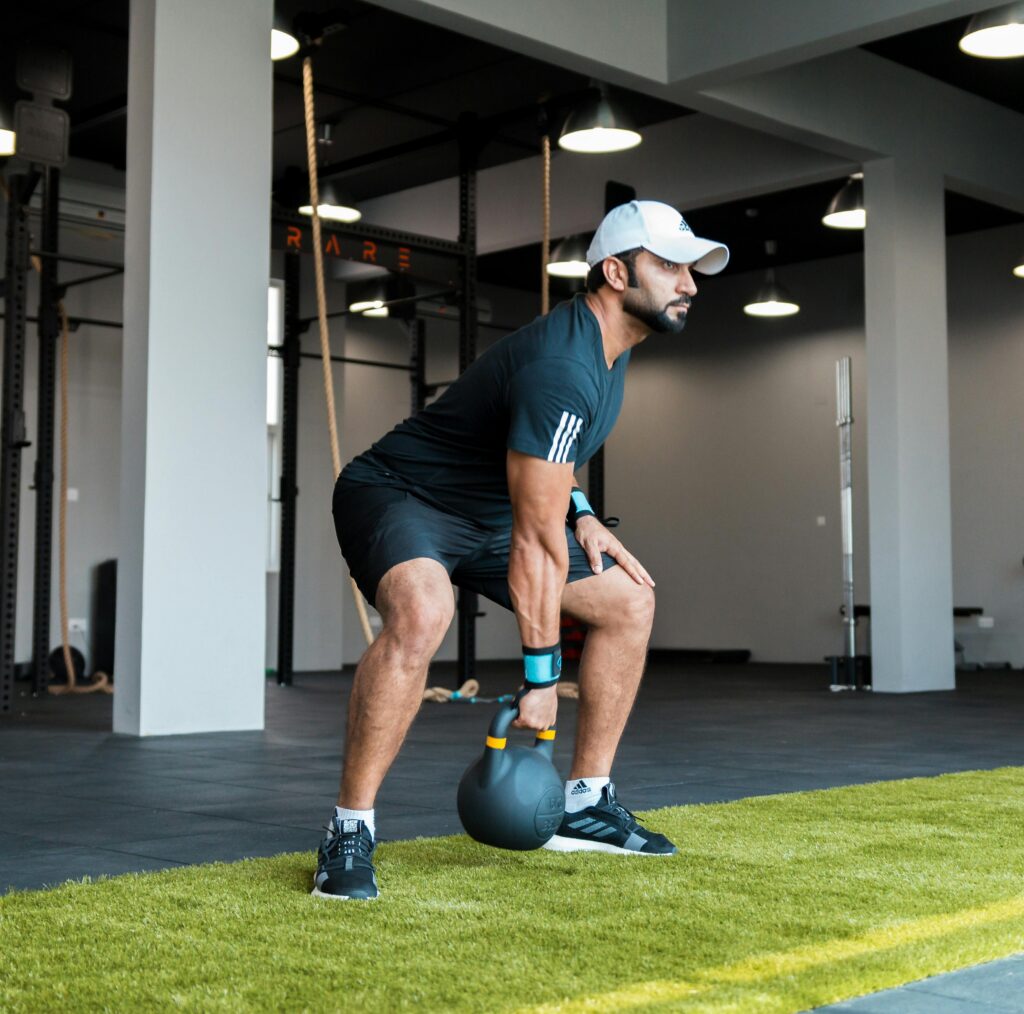
It refers to movement patterns that reflect how the human body was designed to operate: integrated, multi-joint, multi-plane actions that require the nervous system, muscles, and connective tissue to coordinate in real time. Squatting, pushing, pulling, rotating, hinging, carrying. The fundamental vocabulary of being a physical creature in a physical world.
What makes this more than gym jargon is what exercise physiologists and kinesiologists have documented over decades of research: most chronic pain, most overuse injuries, and most age-related physical decline trace back not just to weakness, but to *movement dysfunction*. Patterns that developed early — maybe from an old injury, maybe from years at a desk, maybe just from how you learned to move as a kid — that quietly compound over time.
By the time something hurts, the dysfunction has usually been there for years.
—
How Corrective Exercise in Columbus Addresses the Root Cause
Think of it like a tree. Pain is what you see above the ground. The root system — the movement compensations, the muscle inhibitions, the joint restrictions — lives underground, invisible until something breaks.
Corrective exercise is the practice of identifying and addressing those roots. It’s a systematic approach to restoring proper movement mechanics before (or alongside) building strength and endurance. This means assessing how you actually move — not just what you can lift — and designing a program that rebuilds the patterns your body needs.
Muscle Activation Techniques in Columbus, Ohio
One of the most important tools in this process is Muscle Activation Techniques (MAT), a specialized method for identifying and correcting muscular inhibition. Here’s the simple version: not all weakness is the same. Some muscles are weak because they lack strength. Others are weak because the nervous system has essentially stopped recruiting them — often as a protective response to stress, injury, or poor mechanics.
Conventional training rarely addresses the second category. MAT does. It works by assessing range of motion and muscular function, identifying which muscles aren’t firing properly, and applying specific interventions to restore neuromuscular communication. For someone in Columbus, Dublin, or Upper Arlington who has been training hard but still dealing with nagging joint pain or movement limitations, MAT can be genuinely revelatory. Suddenly the knee that always hurt during lunges doesn’t. The shoulder that caught on every overhead press moves freely.
Biomechanical Analysis for Athletes in the Columbus Metro Area
For junior high, high school, and college athletes throughout Central Ohio, functional movement assessment can be the difference between a breakout season and a season-ending injury. Adolescent athletes are growing rapidly, which means their neuromuscular systems often lag behind their physical size. They’re strong enough to generate force their joints and soft tissues aren’t ready for.
Biomechanical analysis identifies these mismatches before they become ACL tears or stress fractures. It looks at landing mechanics, rotational patterns, hip and ankle mobility, and how load distributes through the kinetic chain during sport-specific movements. For a parent in Westerville or Hilliard whose daughter just made the varsity soccer team, this isn’t overkill — it’s preparation.
—
Personal Training With Physical Therapists: A Different Kind of Guidance
Here’s where Columbus Fitness Consultants diverges sharply from the typical gym experience.
Most personal trainers — even good ones — are fitness professionals, not medical professionals. They can build excellent programs for generally healthy people. But when orthopedic complexity enters the picture — a history of surgery, a chronic joint condition, post-physical-therapy training needs, or movement patterns shaped by decades of compensation — the gap between fitness training and medical fitness becomes consequential.
At Columbus Fitness Consultants, our approach to fitness integrates exercise physiologists, licensed athletic trainers, physical therapists, and biomechanical engineering expertise under one roof. This isn’t a gym with a physical therapist renting space in the corner. It’s a medically integrated team that approaches every client’s movement health with the rigor of clinical science.
That means when a client comes in after completing physical therapy — having gotten out of pain but not yet back to full capacity — the transition doesn’t fall off a cliff. Post-physical therapy training in Columbus is one of the most underserved needs in fitness, and it’s one of the specialties that sets this team apart. The communication between disciplines, the shared language of movement science, the ability to progress loading thoughtfully when there’s a surgical history — these details matter enormously.
Personal Training for Injury Recovery in Columbus, Ohio
For people dealing with orthopedic challenges — whether that’s a replaced hip, a reconstructed ACL, a spine that’s been managed with injections for years, or simply decades of accumulated asymmetries — personal training with injuries requires a fundamentally different skillset. Not caution for its own sake, but precision. The ability to distinguish between discomfort that signals productive adaptation and discomfort that signals tissue stress. The knowledge to modify, regress, or progress appropriately.
This is advanced rehabilitation and corrective exercise — not the kind where the goal is to get you out of pain and back to baseline, but the kind where the goal is to get you to a standard of movement quality you may never have had before.
—
What Functional Movement Looks Like Across the Lifespan
Here’s something worth sitting with: functional movement isn’t a problem that only affects older adults, and it isn’t only relevant to athletes. It exists on a continuum, and where you are on that continuum shifts throughout your life.
In your 20s and 30s, dysfunction tends to be silent. You compensate without realizing it, your body absorbs the error, and nothing hurts — yet. This is the phase where intervention is cheapest in every sense. A young professional in Columbus who spends 50 hours a week at a desk and then goes hard at the gym on weekends is accumulating a debt. The interest rate starts low. It doesn’t stay low.
In your 40s and 50s, the account comes due. The hip that’s been slightly limited for a decade becomes the hip that hurts. The shoulder compensation pattern finally creates impingement. This is often when people seek help — and it’s absolutely the right time to do so. There’s nothing too late about it. But it does require working with fitness trainers in Columbus who understand the layered history of a body that’s been in motion for 40 or 50 years.
For adults 60 and beyond, functional movement becomes the central variable in independence. Not cardiovascular fitness. Not aesthetics. The ability to get up off the floor, to carry groceries without pain, to maintain balance on uneven terrain — these are the markers that determine whether the next decade looks like vitality or limitation.
—
Medical Fitness in Columbus: The Science Behind the Practice
Columbus Fitness Consultants isn’t just philosophically different — it’s *measurably* different. The tools available here exist almost nowhere else in the Columbus metro area, and they transform functional movement assessment from subjective observation into hard data.
**VO2 max testing** measures cardiovascular efficiency and aerobic capacity at a precision that consumer fitness trackers can’t approach. It identifies training zones that are physiologically accurate for your body, not algorithmically estimated. For both performance-focused athletes and adults managing heart health, knowing your actual VO2 max changes everything about how training should be structured.
**DEXA scan services in Columbus** provide precise body composition data, including lean mass distribution. This matters for functional movement because asymmetrical muscle development — say, significantly more quad dominance on one side — shows up clearly and informs corrective programming.
**Lactate testing** helps identify exactly how your energy systems are responding to exercise intensity, which is essential for designing programs that build the right capacities without overloading the system.
Together, these assessments create a movement and physiological portrait that no standard gym evaluation comes close to. It’s the difference between a snapshot and an MRI.
The Vitality Consulting Program in the Columbus Area
For clients who want a comprehensive, long-term approach to movement health and overall healthspan, the Vitality Consulting Program integrates all of these tools into a cohesive strategy. This isn’t a program designed to get you “in shape” by a deadline. It’s a framework for understanding your body as a complex, dynamic system — and optimizing it accordingly.
Clients from Worthington to Dublin have used this program to rewrite the story they thought their bodies were telling them. The person who assumed knee pain was just “part of getting older” discovered it was a correctable movement problem. The athlete who plateaued for two years found the missing variable in a lactate test result. The executive who’d been white-knuckling through workouts with a bad shoulder learned that the shoulder wasn’t actually the problem.
—
The Bridge Is Buildable
Back to that bridge.
The gap between what you can do and what you want to do is rarely as fixed as it feels. The human body is extraordinarily adaptable — more adaptable than most people allow themselves to believe, especially after decades of discouraging messages from pain, limitation, or previous fitness experiences that didn’t account for how they actually move.
But adaptation requires the right input. And the right input requires someone who understands not just exercise, but the biomechanics, neuroscience, and physiology of *your* movement — with all its history, complexity, and potential.
The best personal trainers in Columbus don’t just write workouts. They solve movement problems. They meet you where your body actually is, not where a standard program assumes it should be. They work in collaboration with medical and rehabilitation professionals when that’s what the situation calls for. And they build programs that don’t just make you fitter — they make you more capable, more resilient, and more free in the body you live in every day.
That’s what biomedical fitness in Columbus looks like when it’s done well.
If you’re in Central Ohio — whether you’re a 55-year-old in Upper Arlington looking to stay ahead of decline, a high school runner in Hilliard trying to stay healthy through your season, or a 35-year-old professional in Columbus with a back that’s been talking to you — the bridge exists. Real results are possible, and the people who can help you build it are right here.
The only question is when you decide to start crossing.